
How to Track Brand Mentions in AI Search
Last Updated: November 19, 2026
Quick Summary
To track brand mentions in AI search, build a prompt library of 20 to 30 real buyer questions, run each prompt across ChatGPT, Perplexity, Gemini, and Google AI Overviews, and log whether your brand was mentioned, cited, recommended, or absent. Score each prompt 0-3 to get a baseline visibility score, then repeat the audit on a schedule or use an automated tool.
- Only 16% of brands have a systematic process for tracking how they appear in AI search.
- Track mentions, citations, and recommendations separately, since each signals a different level of visibility.
- A 0-3 scale per prompt produces your baseline visibility score; record the date and model version.
- Fifteen prompts take about 30 minutes, so a free weekly manual loop builds a trend line within a month.
- Pair any dashboard with a monthly manual spot-check, because no tool catches every platform perfectly.
Table of Contents
- Why AI Search Mentions Now Decide Who Gets Found
- What Counts as a Brand Mention in AI Search
- Step 1: Build a Prompt Library That Mirrors Buyer Questions
- Step 2: Run a Manual Audit and Record Your Baseline Visibility Score
- AI Brand Monitoring Tools That Automate the Tracking
- How to Track Brand Mentions in AI Search Free
- Semrush AI Mentions and Share of Voice Tracking
- How to Get Brand Mentions That AI Models Actually Cite
- Frequently Asked Questions
Why AI Search Mentions Now Decide Who Gets Found
Only 16% of brands have a systematic process for tracking how they appear in AI search, according to McKinsey’s CMO survey on AI search. That gap is your opening. When a buyer asks ChatGPT or Perplexity for a recommendation, the brands named in the answer get the call. The rest never enter the conversation.
If your business is missing from those answers, you are losing leads you never see. How to make content visible in ChatGPT search offers a practical guide to getting your content found there.
Below, we show you exactly how to track brand mentions in AI search, score your baseline, and fix the gaps. The approach works whether you run a five-person shop or a mid-market B2B team.
What Counts as a Brand Mention in AI Search
A brand mention is any time an AI system names your business in a generated answer. That sounds simple. In practice, three different things get lumped together, and confusing them wrecks your tracking.
Mentions vs Citations vs Recommendations
- Mention: the AI names your brand anywhere in the response.
- Citation: the AI links to your website or content as a source.
- Recommendation: the AI actively suggests you as a solution.
Industry experts advise tracking mentions and citations separately, since citations often appear for non-branded questions and may come from sources like YouTube (Influencer Strategists AI search report). A mention without a citation still builds brand awareness. A citation without a recommendation builds authority but not pipeline.
Consistency drives all three. If your business name, address, and service details differ across the web, AI models pull conflicting facts. How to make business information consistent across AI search results explains how to fix that. our guide to consistent business information across AI search explains how to fix that.
Step 1: Build a Prompt Library That Mirrors Buyer Questions
Start with the questions your buyers actually type. Not your keyword list. Their words.
Write 20 to 30 prompts across three buckets:
- Problem prompts: “how do I fix low lead flow for my service business”
- Comparison prompts: “best AI marketing consultant for small businesses”
- Brand prompts: “is [your brand] legit” and “what does [your brand] do”
Test each prompt across ChatGPT, Perplexity, Gemini, and Google AI Overviews. Siftly’s 2026 tracking guide recommends building a prompt library that reflects real buyer queries before you audit anything. Skipping this step means you measure the wrong thing.
Step 2: Run a Manual Audit and Record Your Baseline Visibility Score
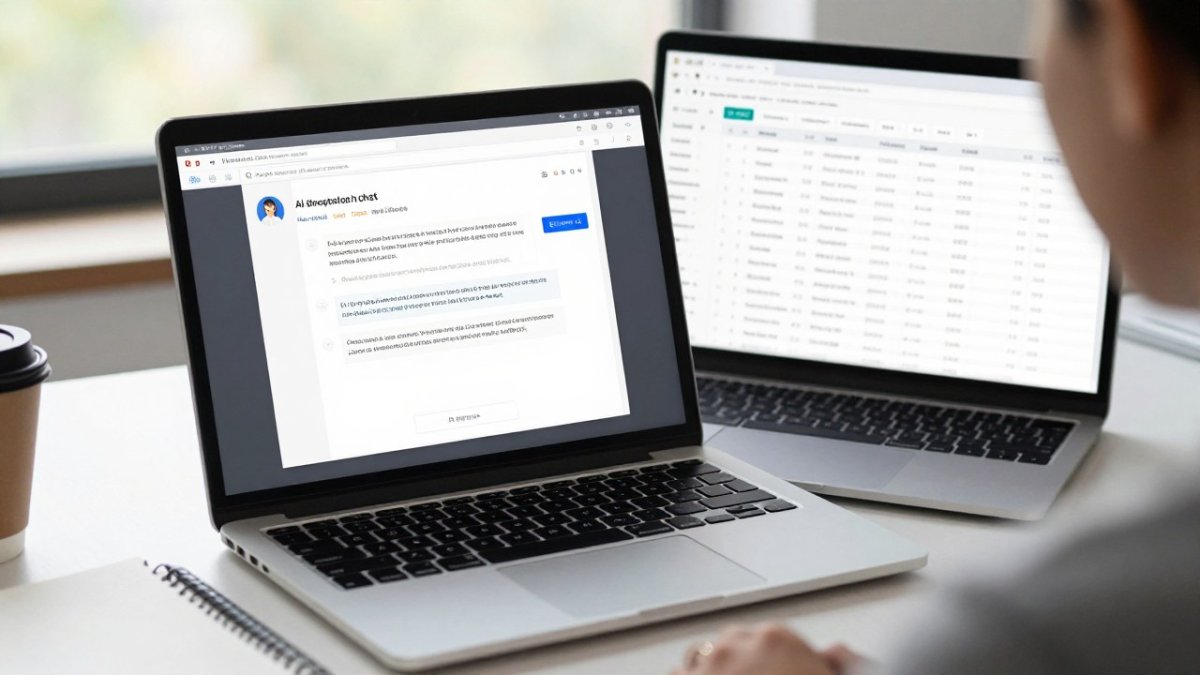
Run each prompt in a fresh session. Log four fields: was your brand mentioned, cited, recommended, or absent. Then score it.
Use a simple 0-3 scale per prompt:
| Score | What It Means |
|---|---|
| 0 | Absent from the answer |
| 1 | Mentioned, no citation |
| 2 | Cited as a source |
| 3 | Recommended by name |
Add the scores and divide by the total possible. That number is your baseline visibility score. Record the date and the model version, because answers shift.
For a full walkthrough of the audit, see our step-by-step AI brand visibility check.
AI Brand Monitoring Tools That Automate the Tracking
Manual audits do not scale past a few dozen prompts.
Most tools report the same core metrics: mention rate, citation sources, share of voice, and sentiment. Cassie Clark Marketing’s measurement framework groups these into mentions, citations, recommendations, AI share of voice, and business outcomes.
Watch out: a tool that only counts mentions will miss negative sentiment. An AI answer that names your brand in a bad light scores the same as a glowing one. Check sentiment manually before you trust the dashboard.
Manual vs. Automated: A Cost-Benefit Read
Manual tracking costs nothing but time, and that time compounds as you add prompts, competitors, and models. Here is a decision framework to weigh the trade-off. Paid tools trade that time for a monthly fee and add historical logging, share-of-voice math, and scheduled runs you would never replicate by hand.
- Solo owners and small teams: start manual for the first 30 days to learn which prompts actually move. Upgrade only when you need daily monitoring or share of voice against more than three competitors.
- Agencies: automated tools pay for themselves when you manage multiple client brands, because the per-brand time cost of manual audits exceeds the subscription. Look for multi-project dashboards and exportable reports.
- Mid-market B2B teams: prioritize tools with historical answer storage and sentiment flags, since your risk is a hallucinated negative claim sitting unnoticed for weeks.
The honest trade-off: no tool catches every platform perfectly. Treat any dashboard as a strong sample, not a census, and pair it with a monthly manual spot-check.
Cross-Platform Consistency: Why One Dashboard Is Not Enough
ChatGPT, Gemini, Perplexity, and Google AI Overviews do not pull from identical indexes or weigh sources the same way. A brand can be cited confidently in Perplexity and be absent or misdescribed in Gemini on the same day. That is why cross-platform consistency is its own tracking job, not a byproduct of one tool.
Run the same prompt set across each model and compare three things: whether the brand appears at all, whether the facts match your canonical business details, and whether the tone is neutral or negative. When one model drifts, the cause is usually a stale or conflicting source it trusts, an outdated directory listing, an old press page, or a third-party article with wrong details. Fix the source, not the prompt. our guide to consistent business information across AI search covers how to audit and correct those source conflicts.
Before you pick a tool, read our roundup of the best AI brand mention tracking tools to compare coverage and pricing.
How to Track Brand Mentions in AI Search Free
You can track brand mentions in AI search without spending anything. The trade-off is time.
Run this loop weekly:
- Open each AI platform in a private window.
- Paste your saved prompts one at a time.
- Copy each answer into a shared doc.
- Mark mention, citation, or recommendation.
- Note any wrong facts the AI repeats.
Fifteen prompts take about 30 minutes. Do it every Monday and you build a trend line within a month. The free route works well for solo owners and small teams. It breaks down when you need daily monitoring or share of voice across ten competitors.
Semrush AI Mentions and Share of Voice Tracking
AI mention tracking tools can pull your brand’s appearances into one dashboard and show share of voice against competitors. That matters because AI answers rarely name one brand. They name three or four. Your share of those slots is the number that predicts pipeline.
Set up a project, add your brand plus three competitors, and let it run for two weeks before drawing conclusions. Early data is noisy. Look for direction, not daily swings.
One honest limit: no tool catches every platform perfectly. Treat the dashboard as a strong sample, not a census. Pair it with a monthly manual spot-check.
How to Get Brand Mentions That AI Models Actually Cite
Tracking tells you where you stand. Getting cited is a separate job, and it is where most guides stop at platitudes. AI models pull from content they can parse and trust, which means the work is part editorial and part technical. Here is the tactical version competitors skip.
Publish Pages a Model Can Parse and Trust
Write one page per buyer question, with the answer stated in the first two sentences and the supporting detail below it. Models reward clear, factual, self-contained passages over keyword-stuffed pages. Keep claims specific and dated where possible, and avoid burying the answer under a long narrative intro.
The Technical Side: Schema That Helps Models Read You
Implementing schema that states your business facts unambiguously helps a model avoid inferring them.
- Organization schema on your homepage with legal name, URL, logo, and sameAs links to your verified profiles, so the model can reconcile your identity across the web.
- LocalBusiness or ProfessionalService schema where relevant, with address, service area, and contact details matching your canonical listings exactly.
- FAQPage schema on pages that answer buyer questions, so the question-answer pair is machine-readable.
- Article and author schema on editorial content, which helps models attribute claims to a real entity.
- Consistent sameAs and canonical URLs so every model resolves your brand to the same entity rather than splitting you into duplicates.
The goal is not to game the model. It is to remove ambiguity. When your name, address, and service details are identical in schema and on-page copy, models stop pulling conflicting facts. our guide to consistent business information across AI search walks through the reconciliation step.
Earn Third-Party Coverage on Sources Models Already Trust
Models tend to lean on sources that are widely cited and easy to verify, such as established industry publications, review platforms, directories, and reputable news. Prioritize coverage that states your category and differentiator clearly, because that is the language the model will reuse.
When the Model Gets It Wrong: Negative Sentiment Mitigation
This is the gap almost no competitor covers. AI models can produce incorrect statements, and they can repeat negative context from sources they trust.
A monthly negative-sentiment sweep is a useful habit: prompt each model with ‘is [brand] legit,’ ‘what are the downsides of [brand],’ and ‘[brand] complaints,’ then log any wrong or negative claim.
Our guide to getting recommended by AI breaks these into a working checklist.
The hard truth: most businesses cannot tell whether AI recommends them or ignores them. That blind spot costs deals every week. Dealey A.I. Strategies built the A.I. Visibility Playbook™ to find that answer fast.
Frequently Asked Questions
How do I know if my brand is being mentioned by AI tools right now?
Run a manual audit. Type five to ten real buyer questions into ChatGPT, Perplexity, Gemini and Google AI Overviews, and note whether your brand appears in the answer and whether it is cited as a source. Repeat the same prompts on the same day each month so the comparison is fair. A simple spreadsheet is a practical way to start.
Can AI searches be tracked for free?
Yes. You can track brand mentions in AI search free by using the consumer interfaces of ChatGPT, Perplexity, Gemini and Google AI Overviews and logging results in a spreadsheet. Build a prompt library of 20 to 30 buyer questions, record mentions, citations and sentiment for each, and repeat monthly. This method is slower than paid tools but gives you a reliable baseline before you spend on automation.
Which tools can monitor brand mentions in AI search?
Options range from free manual audits to paid platforms. Some SEO suites and dedicated AI monitoring tools can track visibility across AI answers and automate prompt testing. Choose based on how many prompts you need to monitor and whether you need share of voice reporting. Start manual, then move to a paid tool once you know which prompts matter.
How often should you check brand visibility in AI search?
Check monthly at minimum. AI answers shift as models retrain and as competitors publish new content, so a quarterly review misses too much movement. Run your full prompt library once a month and set automated alerts for high-priority queries. If you are actively publishing content or running a campaign, check weekly for the prompts tied to that campaign so you can see the effect of your work.


niki
Niki is a Certified A.I. Consultant with expertise in Data Science, Architecture, and Implementation, and a Certified Conversion Strategist. Niki has been featured on CNN, FOX, ABC, NBC, and CBC, and was invited to create coursework for Stanford University.
Related posts